
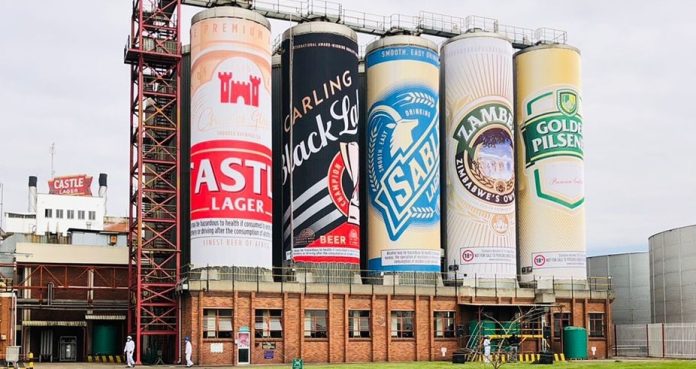

Zimbabwean beverages giant Delta Corporation has surpassed the US$1 billion annual revenue mark for the first time after recording strong growth across its lager beer, sorghum beer and soft drinks divisions during the financial year ending March 2026.
The company posted revenue of more than US$1 billion, up 35 percent from the previous year’s US$807 million. Profit before tax rose 56 percent to US$210 million, while earnings before interest, tax, depreciation and amortisation increased 42 percent to US$236 million.
Addressing analysts in Harare, chief executive Matlhogonolo Valela said the results reflected a long-term strategy focused on expanding volumes, strengthening distribution channels and investing heavily in production infrastructure.
He explained that Delta had spent the past five years working towards surpassing both the US$1 billion revenue milestone and US$200 million in EBITDA. According to Valela, all three of the group’s key product categories — lager beer, sorghum beer and sparkling beverages — achieved record sales volumes during the period.
The company’s revenue growth was also boosted by a stronger product mix and increased US dollar sales. Domestic revenue earned in foreign currency rose to 94 percent from 80 percent in the previous year.
Lager beer sales were among the strongest contributors to growth, with demand exceeding available supply at times. Valela said the company experienced product shortages due to high consumer demand and responded by importing premium beer brands from regional affiliates while accelerating local capacity expansion projects.
Delta is currently upgrading both Belmont Brewery and Southerton Brewery. The projects include installation of a new packaging line, replacement of brewing equipment, expansion of storage facilities and improvements to filtration systems. Once complete, the upgrades are expected to increase lager beer production capacity by between 30 and 35 percent by November this year.
The sorghum beer division also delivered exceptional growth, with volumes increasing 19 percent to 4.62 million hectolitres. This surpassed the previous record of 4.5 million hectolitres set in 1998, a period associated with heightened economic liquidity following war veterans’ compensation payouts.
Valela said the company had long regarded the 1998 record as difficult to exceed. He attributed the latest growth to improved liquidity in rural and informal markets, supported by strong tobacco earnings, mining activity, moderated pricing and aggressive promotional campaigns.
Unlike the lager beer segment, Delta said the sorghum beer business still has enough spare production capacity to support further expansion.
The company’s soft drinks business also achieved record results. Sparkling beverage volumes increased 14 percent, while total soft drink volumes, including operations under Schweppes Holdings Africa Limited, climbed 16 percent to 3.1 million hectolitres.
Valela noted that the growth was particularly significant given growing market competition and the impact of Zimbabwe’s sugar surtax. He said Delta absorbed a large share of the tax burden to keep products affordable and protect market share, supported by marketing initiatives such as the Share A Coke campaign.
However, he warned that the sugar tax continues to put pressure on profitability, revealing that the company paid more than US$30 million in sugar-related taxes during the year. He added that Delta was engaging authorities over the need for regional consistency in sugar tax policies to improve competitiveness and affordability.
Outside Zimbabwe, Delta’s South African unit, United National Breweries, recorded a 6 percent recovery in volumes as the company expanded distribution of Chibuku Super into formal retail outlets. Delta also reopened its KwaZulu-Natal brewery during the final quarter to lower transport costs and improve market reach.
In Zambia, however, National Breweries Zambia faced major challenges. Volumes fell 27 percent due to prolonged electricity shortages and the rise of illicit alcohol sales, which disrupted operations and weakened demand. Despite the decline, Valela said recent growth in premium “super” variants was helping improve margins.
Looking ahead, Delta plans to significantly increase capital expenditure to sustain growth. The company intends to invest more than US$120 million in the 2027 financial year, nearly triple the US$43.9 million spent previously.
The planned investment will mainly target brewing and malting capacity expansion at Belmont Brewery, Southerton Brewery and the Kwekwe operations. Valela said Delta had already made advance payments for critical equipment, which are reflected in the company’s balance sheet as prepayments.