
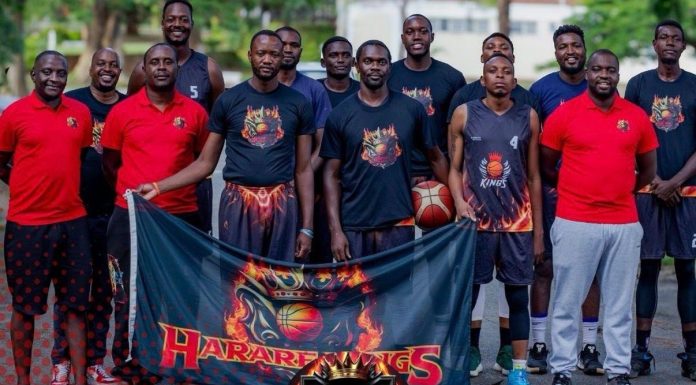

Harare Kings are champions—no drama left in the standings, no debate left on the court.
A 78–70 victory over JBC on a high-stakes night in Richwood sealed the title and confirmed what their season had been building toward: this is the best team in the league, full stop.
The Kings didn’t cruise to it. They had to take it.
Despite missing head coach Tafara Chirambira, the team showed no structural cracks. Assistant coach Kennedy Bushu stepped in and kept everything intact—rotations sharp, defensive pressure consistent, and late-game execution disciplined. There was no drop-off in identity, which says as much about the system as it does about the personnel.
The game itself followed a familiar championship script. Harare Kings started strong, dictating tempo early and building a cushion. But JBC refused to fold, flipping momentum in the third quarter and briefly putting the Kings on the back foot.
That’s where contenders get exposed. The Kings didn’t.
Instead, they delivered their most decisive stretch when it mattered most. The fourth quarter was controlled, physical, and efficient. Defensive stops turned into transition opportunities, and clean execution in half-court sets shut the door. The result: a closing run that put the game out of reach and the title beyond doubt.
The numbers reinforce the outcome. Harare Kings dominated the glass 46–32, controlling possession and limiting second-chance points. That edge defined the game as much as the final score.
Individually, N. Penduka led with authority, while T. Muroyiwa and W. Kakomo imposed themselves inside. K. Pote added efficiency, but the real story was collective output—multiple players delivering in key moments without forcing the game.
In the standings, it’s over. Harare Kings sit on 39 points, ahead of both JBC and Bulls at 37. With one round remaining, even a loss pushes the Kings to 40—mathematically untouchable.
Title secured.
What makes it sharper: this is their first Super 6 season. No slow build, no learning curve excuses—they entered, adapted, and took over. Consistency, structure, and belief carried them through a competitive field, and they didn’t blink when pressure peaked.
Now attention shifts to the national stage in Bulawayo, where tougher opposition and higher stakes await. There’s also a bigger prize looming—qualification pathways toward the Basketball Africa League.
But that’s next.
Right now, the conclusion is clear. Harare Kings didn’t just win a championship—they controlled it, closed it, and left no doubt about it.