
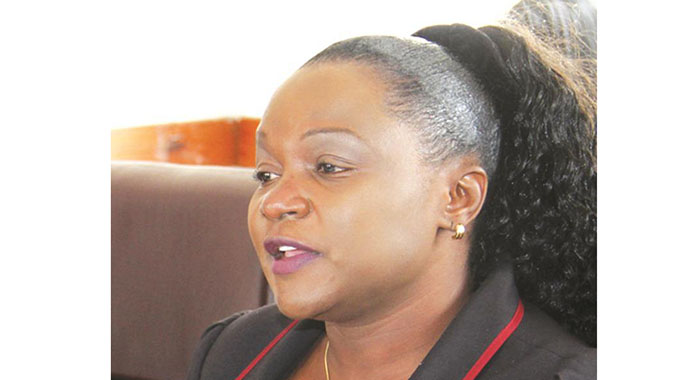

Zimbabwe’s Attorney General Virginia Mabhiza has moved to clarify the purpose of the Constitution of Zimbabwe (Amendment No. 3) Bill, of 2026, saying the proposed changes are meant to strengthen state institutions rather than favour current office holders.
Her remarks follow growing public debate over the Bill, particularly its proposals to modify aspects of the country’s electoral framework.
In a statement, Mabhiza urged citizens to rely on the official version of the Bill that was gazetted on 16 February 2026 by the Speaker of the National Assembly, Jacob Mudenda, for accurate information about the proposed constitutional changes.
She explained that the Bill and its accompanying memorandum provide the official legal details of the amendments and the reasons behind them, following Cabinet approval earlier in February.
According to Mabhiza, the proposed amendments focus on several constitutional provisions, including sections 92, 95, 143 and 158, which deal largely with how national elections are scheduled and conducted.
The Attorney General said the objective of the Bill is to create a clearer and more structured system for organising elections, ensuring consistency and efficiency in the governance process rather than altering leadership limits or granting advantages to individuals currently in office.
She noted that the amendments address issues linked to the country’s electoral cycle for the Presidency, Parliament and local authorities.
Under the current constitutional framework, the tenure of the President and that of Parliament are interconnected through provisions that establish a harmonised electoral system.
Mabhiza said section 95(2)(b) outlines the President’s term within the electoral cycle, while section 143(1) governs the duration and dissolution of Parliament. These provisions work together with section 158, which determines when general elections must be held.
She said the proposed changes aim to synchronise the timing of elections across key political offices to ensure a more predictable and efficient system.
The Attorney General stressed that section 95(2)(b) does not deal with presidential term limits, which remain regulated by other provisions of the Constitution.
Under the proposed amendments, the current five-year electoral cycle would be replaced with a seven-year cycle, while maintaining the system of harmonised elections for Parliament and local authorities provided for under section 158.
The Bill also includes transitional provisions meant to clarify how the new electoral cycle would apply in relation to the current one.
Mabhiza further emphasised that although the duration of the electoral cycle may be altered, the changes do not extend presidential terms or provide any special benefit to incumbents. Instead, they establish a formal framework for how future elections will be organised.
She said the amendments should therefore be viewed as reforms aimed at improving the structure and timing of the national electoral process rather than as changes to constitutional provisions governing presidential term limits.
Members of the public, she added, are encouraged to consult the gazetted Bill to fully understand the scope and implications of the proposed amendments.