
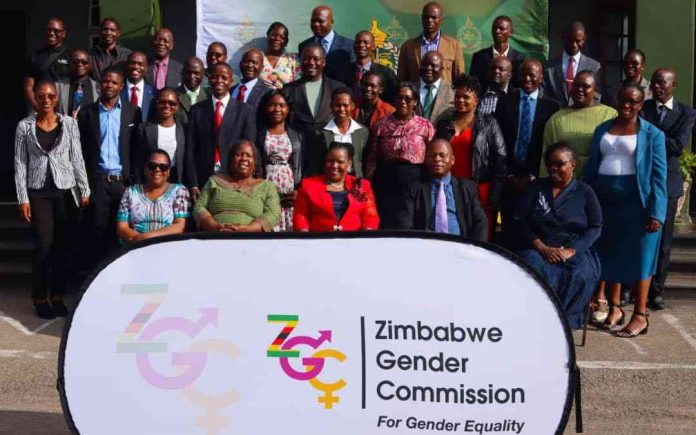

The recent proposal to transfer the functions of the Gender Commission to the Human Rights Commission under Constitutional Amendment Bill No. 3 has ignited a wave of misunderstandings and outrage.
It is an unfortunate reality that many people are misconstruing this shift as a dismantling of the protections afforded to women and other genders. However, a closer examination of the situation reveals that this is not the case. Instead, this reconfiguration is a strategic move aimed at enhancing the effectiveness and reach of gender rights advocacy within the broader framework of human rights.
To begin with, it is crucial to clarify that the remit of the Gender Commission extends well beyond the advocacy of women’s rights alone. The essence of the commission is to represent the rights and interests of all genders, including men.
It is a common misconception that gender equality serves only the needs of women, yet this perspective neglects the complex interplay of gender dynamics that affects every societal member. The rights of every individual—whether male, female, or non-binary—are inextricably linked, and the fight for gender equality should reflect this reality.
At the heart of this debate lies a fundamental question: What is the difference between advancing the rights of women and men and advancing human rights? If we are to embrace the notion that all individuals are humans deserving of dignity and equal consideration, then it follows that their rights should be advanced through a cohesive and inclusive Human Rights Commission.
By transferring the functions of the Gender Commission into the Human Rights Commission, we are not removing vital advocacy work; instead, we are institutionalising it within a mechanism designed to address and promote the rights of all individuals.
The Gender Commission is not being abolished; rather, its functions are being integrated into the Human Rights Commission as part of a focused effort to streamline operations and eliminate duplication of roles. The two commissions were performing parallel functions that often overlapped, and by merging them, the government demonstrates a commitment to a more efficient and effective approach to human rights advocacy. The Human Rights Commission has historically upheld the rights of women and has performed admirably in highlighting and addressing violations. This transfer does not undermine those efforts; on the contrary, it reinforces them by providing a more consolidated platform for advocacy.
One cannot overlook the government’s commitment to achieving gender parity across all sectors—an admirable goal that remains a cornerstone of political, social, and economic progress. The responsibility for promoting a balanced representation of women and men lies principally with those in power: the ruling party, the Women’s League, and the Ministry of Women’s Affairs. These entities are tasked with the proactive advancement of women’s rights, while the Commission serves as an independent arbiter, ensuring that the implementation of policies aligns with human rights principles. Much like referees in a football match, the Commission is responsible for enforcing the rules. The players—the authorities—are responsible for advancing their own rights and responsibilities.
In light of this, it is puzzling to see influential figures, such as those from the ZANU-PF Women’s League and the Ministry of Women’s Affairs, claiming that this transition threatens the progress made in the fight for gender equality. Such statements not only misrepresent the function of the Commission but also inadvertently shift the burden of accountability away from where it rightfully belongs.
It is essential to understand that the role of the Gender Commission was not to supplant the responsibilities of these bodies but to complement their efforts in holding them accountable.
By insisting that the Commission remain in place solely to bolster their advocacy roles, these leaders are deflecting from their obligations as the primary advocates for women’s rights. The merger should be viewed not as a loss but as an opportunity to refocus and reinvigorate efforts toward achieving gender equality through more effective channels.
Moreover, the financial implications of maintaining two separate commissions cannot be ignored.
The government has devoted substantial resources to fund both the Human Rights Commission and the Gender Commission, which are, in effect, performing identical or overlapping functions. It is sound fiscal policy to merge these commissions, ensuring that taxpayer funds are deployed efficiently while reinforcing a unified approach to human rights advocacy. By combining resources, we can bolster the fight against gender inequality while eliminating unnecessary duplication.
In summary, the transition of the Gender Commission’s functions to the Human Rights Commission should not be misconstrued as a setback for gender equity. Instead, it represents a rationalisation of responsibilities that promises to enhance advocacy efforts for all genders.
As we move forward, it is imperative that we remain focused on the goal of equality and justice, recognising that the path to progress requires both collaboration and clarity of purpose.
Through unwavering commitment to human rights—encompassing all genders—we can move closer to a society where every individual is afforded the rights and dignity they deserve.